
Begin with a party question
Anton, Yana, and Lev each have a personal skill tree, multiple supported playstyles, and a personal story arc, but their combat growth meets in one shared deck. Begin by deciding what the common hand should repeatedly accomplish. A focused plan can concentrate support around one lead contribution; a broader plan can preserve useful actions across all three heroes. In either case, the mistake is adding cards without a party-level purpose.
Write the plan as a short rule that can survive later choices. A focused rule asks whether each new card strengthens the lead sequence or protects the heroes who enable it. A distributed rule asks whether a contribution stays useful beside cards from either teammate. When actual hands stop expressing that relationship, use respec to revise one personal branch, keep the other variables stable, and compare the next draws.
Before spending a progression choice, write one expected mixed-hand example and one failure condition. The example should show how a contribution from one hero continues into a card from another before a visible countdown. The failure condition should name what would make the addition too narrow, such as requiring one rare partner or displacing a flexible response. These two notes give later hands a clear test and prevent a personal upgrade from being accepted only because its isolated effect looks strong.
Treat card order as time
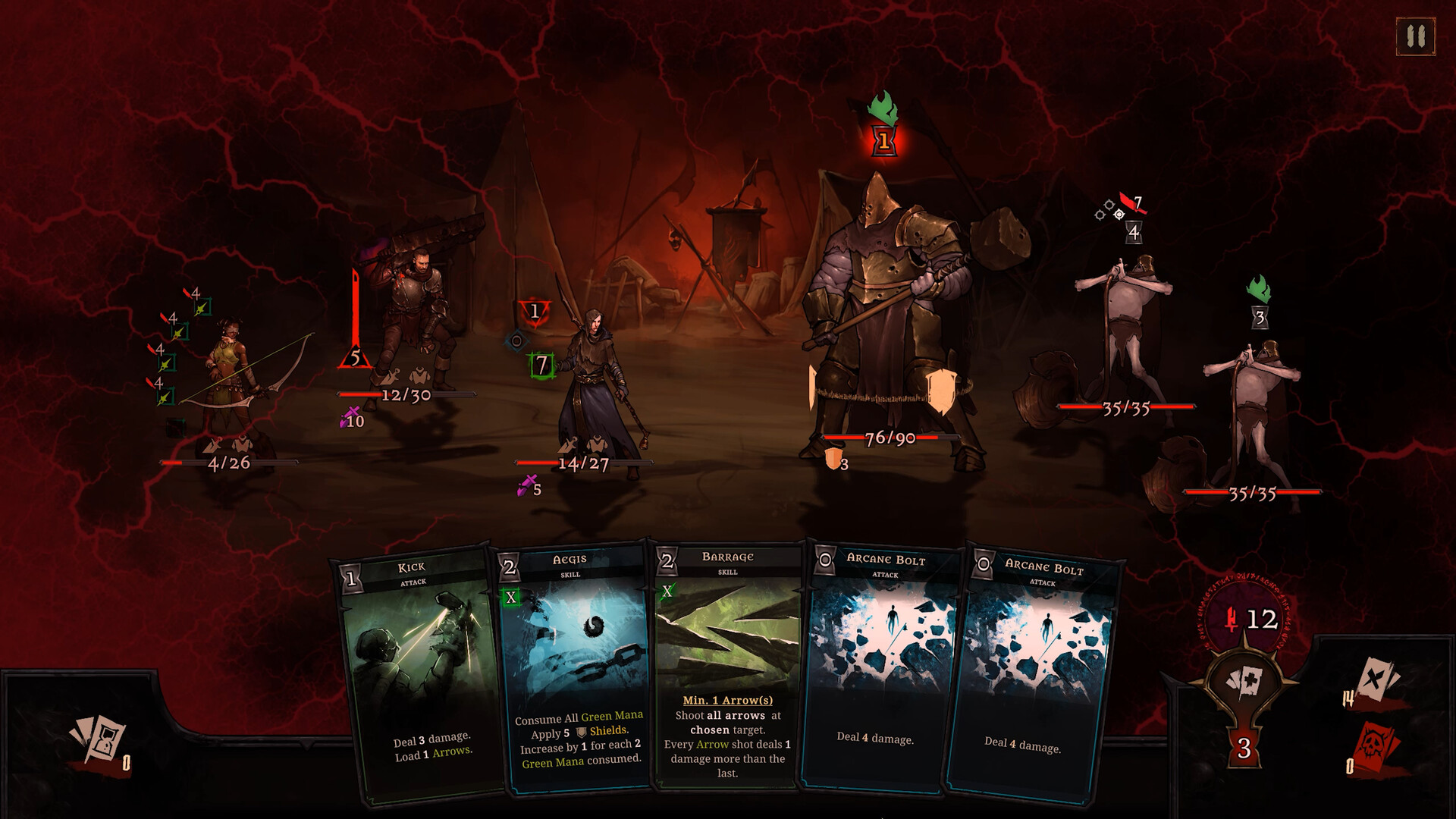
Shards of Order has no conventional turns and no mana points. Enemies show visible countdowns, and playing cards moves those counters. Treat the battlefield as an ordered queue: identify the action arriving first, judge how each candidate card changes the distance to it, and decide what condition the party must reach before that moment. A strong isolated effect can still be the wrong opening if it advances an urgent threat before the party is ready.
Plan a short sequence, then read every clock again after each card. This prevents a round-based assumption from hiding a changed priority. Check the countdown after the nearest one as well, because spending every useful response on the first danger can expose the party to the next. The correct order carries the group through the visible queue; it is not automatically the sequence with the largest first result.
| System | Read first | Decision | Party consequence |
|---|---|---|---|
| Enemy countdown | Closest announced action | Order protection, delay, or pressure around it | Every play changes the timing window |
| Shared deck | Current three-hero hand | Balance specialization with consistency | Every new card changes party draw odds |
| Equipment card | Card entering the pool | Evaluate the insertion with the item | Personal gear can reshape later hands |
Protect shared draw quality
Deck growth is a party-wide probability decision. When a skill or item offers another card, compare its immediate benefit with what it does to future mixed hands. A useful local upgrade can make the overall deck less coherent if it competes with the actions the other heroes need to find. More cards and a better deck are different outcomes, and the shared pool makes that difference visible across all three personal progressions. State which party sequence the addition is meant to improve before accepting it, so later hands can confirm or challenge a specific expectation.
Use actual hands as feedback. If draws contain attractive individual cards but rarely form a timely sequence, review the links among the three builds. A focused deck should support its lead plan without leaving the other heroes unable to answer the clock. A distributed deck should produce contributions that remain useful in mixed combinations. Revise one choice, then observe enough comparable hands to identify whether consistency improved instead of treating a single strong or weak draw as a final verdict.
Keep a short draw-quality record during the opening route. Note the nearest enemy countdown, the cards that could begin a useful line, the follow-up that was missing or redundant, and the progression or equipment source responsible for that contribution. When the same break appears again, remove or replace one source and repeat the observation. This turns vague frustration into a controlled build question and protects the deck from additions that are individually appealing but repeatedly fail to cooperate with the current party rule.
Read gear as part of the deck
Items are grouped into weapons, armor, and memories, and equipment can define a playstyle while adding unique cards to the shared deck. Each item is therefore two linked decisions: what it changes for the wearer and what its card changes for the party. Do not stop at the personal benefit. Follow the inserted card forward into the mixed hands Anton, Yana, and Lev will use together, and identify what existing contribution becomes less likely to appear after the shared pool grows.
Evaluate equipment in the same order every time. Identify the category and wearer, state the personal progression it supports, check whether it inserts a card, ask whether that card advances the party rule beside either teammate, and consider whether the sequence still works if the card arrives earlier or later than hoped. This comparison respects the deck around the item and avoids a universal ranking unsupported by the available item data.
When two choices remain close, perform one controlled swap. Leave the personal trees and all other equipment stable, then compare the same visible timing questions in later combat: the nearest action, the next announced action, the useful mixed sequence, and the state left after the line. Record whether the wearer improved, the shared hand became more coherent, or the two effects disagreed. This produces a practical decision for the current party without inventing rarity tiers, complete statistics, or item names that the published record does not supply.
Test one progression change at a time
The campaign uses persistent experience-based progression rather than runs or resets, and official updates describe it as having no random encounters. Respec is available, so a disappointing hand is a prompt to diagnose the build rather than restart a run. If the common pool repeatedly fails to produce the intended relationship, change one personal tree while keeping the other trees and equipment stable. Write down the contribution being removed or revised and the mixed sequence the replacement is expected to improve.
Compare the result under the same visible questions: which countdown is nearest, what can all three heroes contribute, and which cards came from equipment? A controlled change preserves a useful before-and-after comparison. Changing several trees and items at once can improve the deck, but it prevents the player from learning which personal contribution made the shared sequence more reliable or which added card was creating competition for the same timing window.
Do not judge the respec only by the first hand after the change. Look for a repeated improvement in the relationship the test targeted: a useful opening appears more often, a narrow setup no longer crowds the pool, or contributions from both teammates connect with the revised branch more cleanly. If the result is mixed, restore the prior branch before testing another variable. Persistent progression and respec make this iterative method more appropriate than treating every build problem as preparation for a fresh run.
Use the Journal as a route record
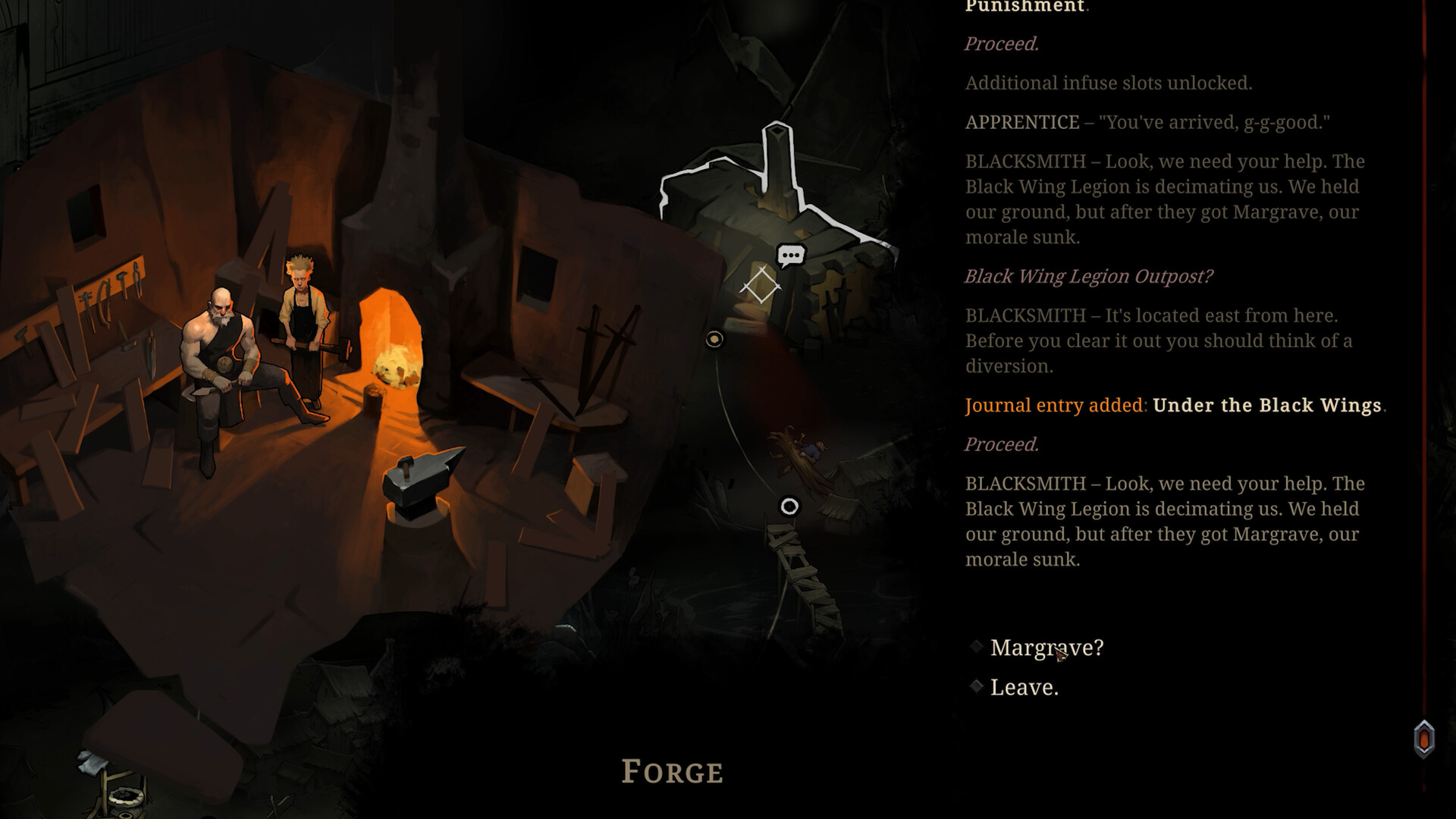
The Journal stores important events and suggests possible solutions instead of pointing to conventional quest markers. Read it after conversations, story events, and consequential choices, then separate resolved information from open possibilities. When it offers several directions, choose the thread that fits the party's current progression rather than waiting for a map icon to define the next step. Preserve the wording and the event that produced it so the note remains meaningful after the party moves elsewhere.
Attribute cards can unlock interactions during story events, so progression choices can matter outside combat. When an entry remains unresolved, compare its wording with the party's current attribute contributions, equipment, and recent conversations. The journey crosses three regions shaped by Laws governing life, death, and time; keep a clue attached to the decision that produced it instead of reducing every Journal entry to a generic task line or assigning an unofficial name to an unlabeled map point.
Use a simple route record with three parts: what has already happened, what possibility remains open, and what build or dialogue change occurred since the last review. Revisit an entry after meaningful progression changes, but do not assume that every new card or item unlocks it. If a path is tested and does not resolve the thread, retain that result alongside the current Journal state. This prevents repeated guesswork and keeps the walkthrough spoiler-light because it teaches how to organize verified information without inventing objectives, required destinations, or story outcomes.
Frequently asked questions
Is Shards of Order a roguelike?
No. Official developer updates describe Shards of Order as a persistent RPG with no runs, progression reset, or random encounters. Experience levels, equipment, personal skill trees, dialogue choices, card and skill checks, and respec shape one continuing campaign. That changes how early mistakes should be handled: diagnose the shared deck, revise one progression or equipment source, and compare later hands instead of planning around a fresh run. The walkthrough therefore uses controlled adjustments and Journal review as its main loop, while avoiding assumptions about encounter order, repeatable runs, or randomized routes that the developer explicitly separates from the game.
Does this walkthrough list every quest objective?
No. The published material establishes the Journal, story-event choices, attribute-card interactions, three regions, persistent progression, equipment, and the major combat relationships, but it does not support a complete objective-by-objective route. This page gives a spoiler-light decision method: preserve the context of each Journal entry, connect open possibilities with the party's current progression, and record which route or build state was tested. It does not invent location names, boss solutions, drops, dialogue outcomes, or mandatory orders when those details cannot be reproduced from the game or an official publication.