
Separate the three equipment groups
Begin by identifying whether the choice is a weapon, armor piece, or memory. Keep those categories visible because they describe the published equipment structure, even when two items could support a similar party plan. Category is a factual slot label; it is not proof of an undocumented rarity, damage role, class restriction, or power tier. Starting with the group prevents comparisons from drifting into fields the available record does not supply and makes it easier to return to the same inspection method when a later item becomes available.
Next identify the hero wearing the item and the personal progression it supports. Official material says equipment can change playstyles, so the first question is how the item alters what that hero contributes. Describe the purpose in observable terms: what part of the personal build it reinforces, which countdown problem it helps address, or which kind of mixed sequence it is meant to support. Avoid replacing that description with a guessed class label, because Anton, Yana, and Lev each support multiple approaches rather than one fixed role.
Then check whether the item inserts a card into the shared deck. If it does, the equipment decision continues beyond the wearer. Follow that contribution into hands containing cards from both teammates, ask when it is useful against the visible enemy queue, and identify what existing card becomes less likely to appear after the pool grows. A weapon, armor piece, or memory can be personally effective and still create draw competition. Keeping category, wearer, playstyle purpose, and deck consequence separate makes the tradeoff legible without inventing item statistics.
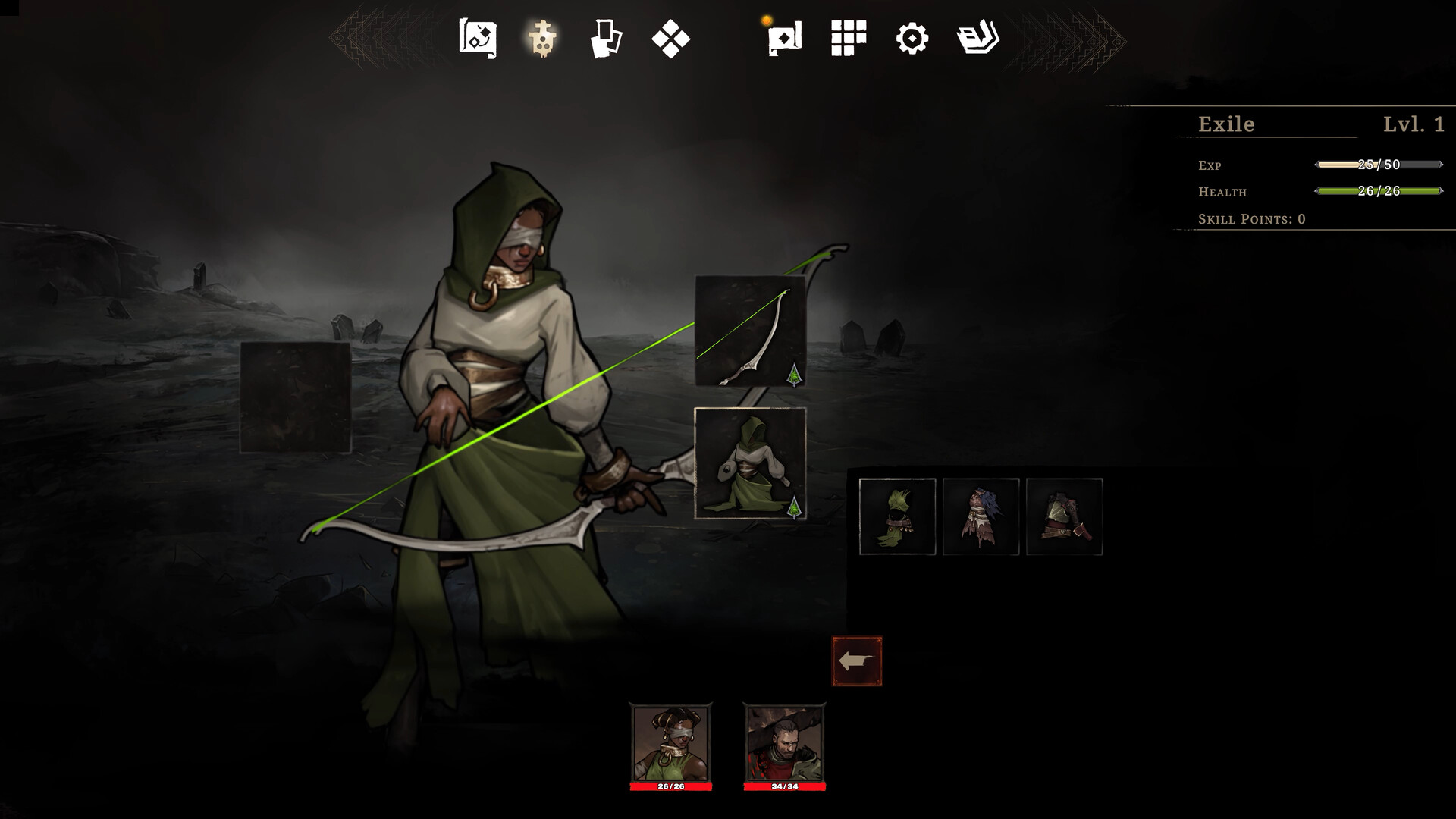
Apply the wearer-and-deck test
First judge the wearer. Does the item reinforce the personal tree being tested, make a supported playstyle easier to express, or solve a timing problem that repeatedly appears in combat? State the expected change before equipping it. A clear expectation makes later hands interpretable: the wearer should contribute to a defined party condition rather than merely appear stronger in an unspecified way. If the purpose cannot be described without an unsupported number, rarity, or role label, return to the visible relationship between the item, the hero, and the shared hand.
Next follow any granted card into mixed hands. Ask whether it remains useful beside contributions from either teammate, whether it competes with another setup card, and what the party becomes less likely to draw after insertion. An item can be personally attractive and still weaken the common sequence if its card does not fit the intended timing plan. Conversely, a modest-looking personal change can be valuable when the granted card gives several different mixed hands a reliable path through the nearest countdown.
Finish the test by comparing the two layers together. Keep the item only when the wearer's improvement and the deck consequence support the same party rule, or when one benefit clearly compensates for a known cost that the rest of the build can absorb. Record disagreement instead of hiding it: an item may help the personal tree while making the shared pool less consistent, or improve mixed-hand flexibility without fitting the current wearer plan. Those are actionable observations, whereas a single global score would erase the verified connection between equipment and deck construction.
| Inspection field | Question | Decision consequence |
|---|---|---|
| Category | Weapon, armor, or memory? | Keeps the comparison attached to the published slot structure |
| Wearer | Which hero receives the personal benefit? | Connects the item to one progression lane |
| Playstyle effect | What personal approach does it reinforce? | Tests the immediate build purpose |
| Granted card | Does the item add to the shared pool? | Extends the choice to all three heroes |
| Timing fit | When is that card useful against the queue? | Prevents a local upgrade from weakening later hands |
Test one equipment swap at a time
An equipment swap can change both the wearer and the shared deck, so replacing several items at once creates a noisy comparison. Keep the personal trees and other equipment stable, replace one piece, and state what should improve before entering the next combat. The test can target the wearer's contribution, the timing fit of an inserted card, or the consistency of a mixed sequence, but it should not change all three questions at once. A narrow test makes it possible to understand the result rather than merely notice that the new setup feels different.
Observe the same checkpoints with each version. Read the nearest countdown, the following announced action, the cards supplied by all three heroes, and the party condition reached after the chosen line. If the new item grants a card, note whether that card appeared with useful partners and whether another needed contribution became harder to find. Do not require one specific draw to prove the item. Look for the same sequence relationship across multiple hands while leaving the rest of the build unchanged.
If the build improves, identify the layer responsible: the wearer may express the personal tree more clearly, the common hand may become more coherent, or both may occur together. If it weakens, restore the previous piece before testing another category. This preserves a clean baseline and avoids stacking uncertain changes. The process does not need a universal tier list; it measures the item inside the exact party, progression, and shared pool it changes, which is the context the published equipment system makes relevant.
Do not rank items without their deck context
The available official material supports the three equipment categories and the relationship among gear, playstyles, and granted cards. It does not support a complete item roster with normalized numerical fields. A universal ranking would therefore claim more precision than the current record can reproduce and would hide the most important verified fact: the value of an equipment card depends on the shared pool and the countdown windows created by the rest of the party. The absence of a full table is a reason to use a stronger comparison method, not a reason to guess missing rows.
Use a contextual record instead. Note category, wearer, personal purpose, whether a card enters the deck, which mixed-hand partners make that card useful, and which visible timing problem the sequence addresses. Add a short observation from a controlled swap: what improved, what became less consistent, and what remained unchanged. These fields allow two observed choices to be compared without pretending that every item can be reduced to one score or that a screenshot exposes all items, values, and restrictions in the released game.
Keep any conclusion scoped to the build that produced it. An item can be the better choice for one arrangement of personal trees and a worse choice after respec changes the cards around it. Update the conclusion when the shared pool changes, and separate a verified interface fact from a player observation. This boundary makes the page useful now and ready for future structured data: complete names or values can be added when a reproducible source exists, while the wearer-and-deck method remains valid across versions and party plans.
Frequently asked questions
What equipment categories are in Shards of Order?
Official developer material groups items into weapons, armor, and memories. Those categories describe the equipment structure but do not, by themselves, establish rarity tiers, fixed class restrictions, or a power ranking. Evaluate a choice in two layers: first identify how it supports the wearer's current personal progression, then check whether it adds a card to the shared pool and how that contribution behaves beside cards from both teammates. Keeping category, wearer, playstyle purpose, and deck consequence separate prevents a local upgrade from hiding a party-wide draw tradeoff.
Is there a best equipment tier list?
The current first-party record does not support a complete universal ranking, and the verified system makes context especially important. An item's value depends on the wearer, the personal tree being tested, any card the item inserts, the other contributions already in the shared deck, and the enemy countdown windows the party needs to answer. Use controlled one-item swaps and compare the same timing questions with the rest of the build stable. That produces a defensible conclusion for the current party without inventing missing stats, item names, or a global score.