
Use the shattered Laws as the world frame
The setting revolves around Laws that once governed life, death, and time. Their destruction shapes the campaign, and restoring them carries consequences. This establishes the world's central frame without supplying a safe list of every Law, faction, or outcome. Keep the broad premise separate from names or explanations that the official material does not provide. A useful world guide can explain how the concept organizes choices while refusing to turn a dramatic phrase, interface fragment, or visual motif into a complete cosmology.
When a conversation or Journal entry refers to order, mortality, time, or restoration, attach that reference to the local context that revealed it. Record what happened, which choice or interaction preceded the entry, and what possibility the Journal now suggests. Do not apply the central premise as a universal answer to every event. The player still needs the specific dialogue, route state, attribute cards, equipment, and progression that make an option available in that moment.
Treat consequences as route-bound observations. If a decision changes a later entry or interaction, preserve the earlier choice alongside the result rather than presenting the outcome as inevitable. The official premise confirms that restoration matters; it does not establish one best order, one guaranteed resolution, or a complete list of effects for this reference. This method lets the page discuss the Laws as the campaign's governing problem while protecting players from fabricated solutions and keeping later discoveries traceable to the circumstances that produced them.
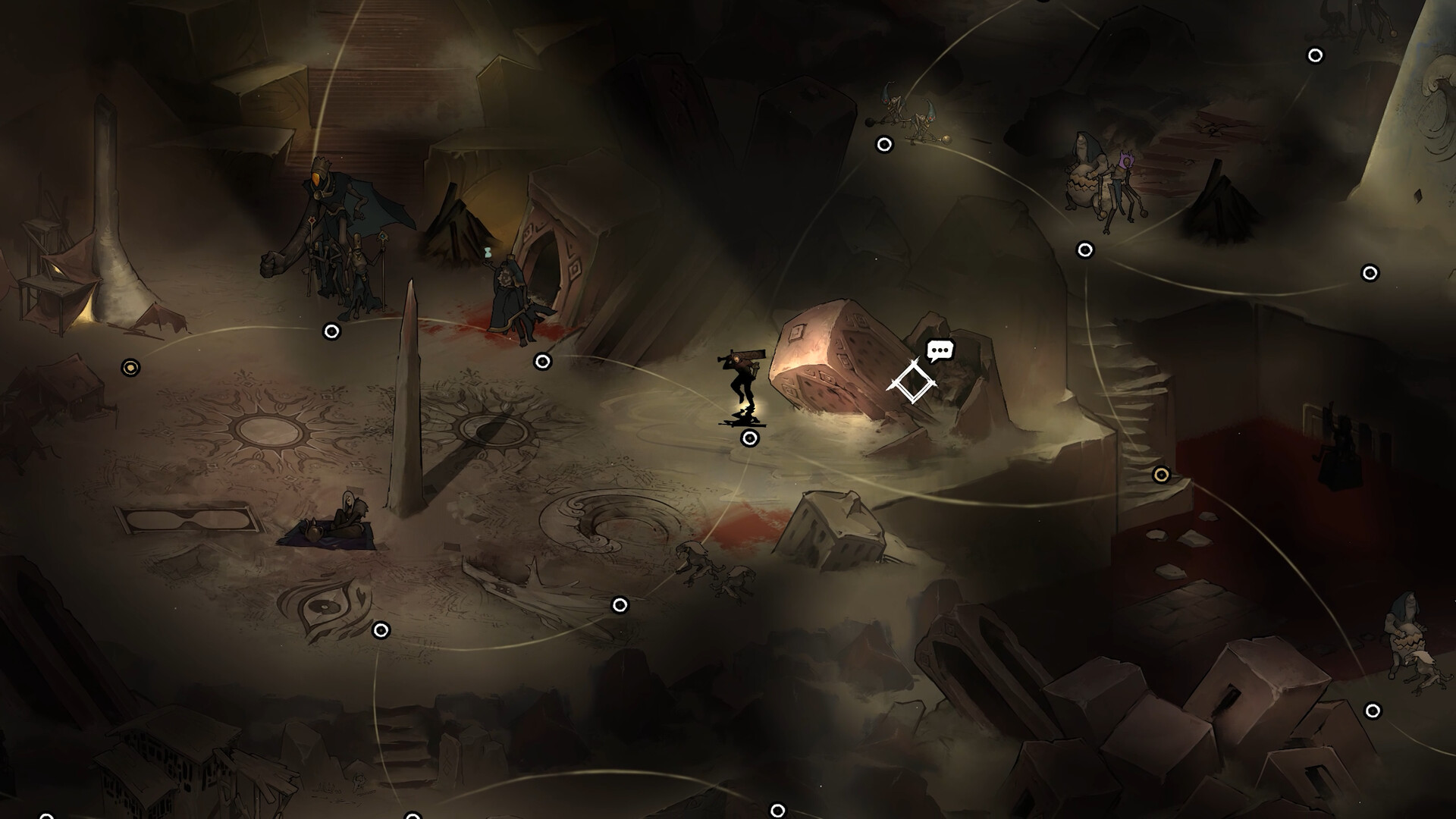
Treat three regions as structure, not a guessed catalog
The official store confirms three unique regions. That number helps establish campaign structure, but the available record for this wiki does not provide a complete first-party naming and route taxonomy. Use the official map to recognize connected movement, points of interest, and party context while keeping any unlabeled location outside the published route list. A visible node or landscape can support discussion of exploration, but it cannot safely supply a fan-made region name, encounter label, boss identity, or promised reward.
Record progress through what the Journal says happened, which decision produced the entry, and what possibility remains open. This method survives movement between regions because it attaches a thread to campaign information rather than to an unofficial map label. When several paths are visible, distinguish the route the party actually followed from alternatives that remain unexplored. Do not convert the presence of a connection line into a claim about mandatory order, difficulty, or story outcome.
Use the three-region fact as an organizing ceiling, not as an invitation to fill three empty database rows with guesses. A region entry should be created only when its name and scope can be reproduced from the game or an official publication. Until then, the guide can still help: preserve complete official frames, connect Journal notes to the choices that produced them, and describe world movement without inventing labels. The same boundary applies to handcrafted boss fights, which are confirmed as a feature but cannot receive names, drops, weaknesses, or solutions absent from the published record.
| World record | What to keep | What not to assume |
|---|---|---|
| Region | The campaign confirms three distinct regions | An unofficial name or complete node list |
| Law | Life, death, and time define the central premise | A complete taxonomy or guaranteed restoration outcome |
| Journal entry | Events and possible solutions recorded by the game | A hidden objective or one mandatory route |
| Story interaction | Attribute cards can unlock options | That every card check has one best answer |
| Boss context | Official material confirms handcrafted boss fights | A name, drop, weakness, or solution absent from evidence |
Turn the Journal into a decision record
Read the Journal after conversations, story events, and consequential choices. Separate what already happened from the possible solutions it suggests, then note which thread can be acted on with the party's current progression. The Journal replaces a simple quest-marker loop with interpretation, so a useful route record preserves the wording and circumstance that made an option meaningful. Write down the last event, the decision that preceded it, and the unresolved possibility rather than reducing the entry to a generic destination.
When a thread remains open, compare it with recent dialogue, current attribute cards, equipment, and any respec change. Developer material states that attribute cards can unlock interactions during story events, so later progression can make an earlier possibility worth reviewing again. Revisit the Journal after a meaningful build change instead of assuming that the absence of a marker means the thread is complete. At the same time, do not promise that a specific card or item will solve an entry unless the game directly demonstrates that relationship.
Maintain three statuses in your own notes: resolved information, an open possibility, and a route already tested. That distinction prevents repeated travel based on a line that merely records what happened, while keeping genuine alternatives visible. If a later event changes the meaning of an entry, append the new context rather than overwriting the earlier decision. The resulting record follows the campaign's actual sequence and can be checked against the Journal, which is more dependable than an unofficial checklist built from guessed objectives or unlabeled map nodes.
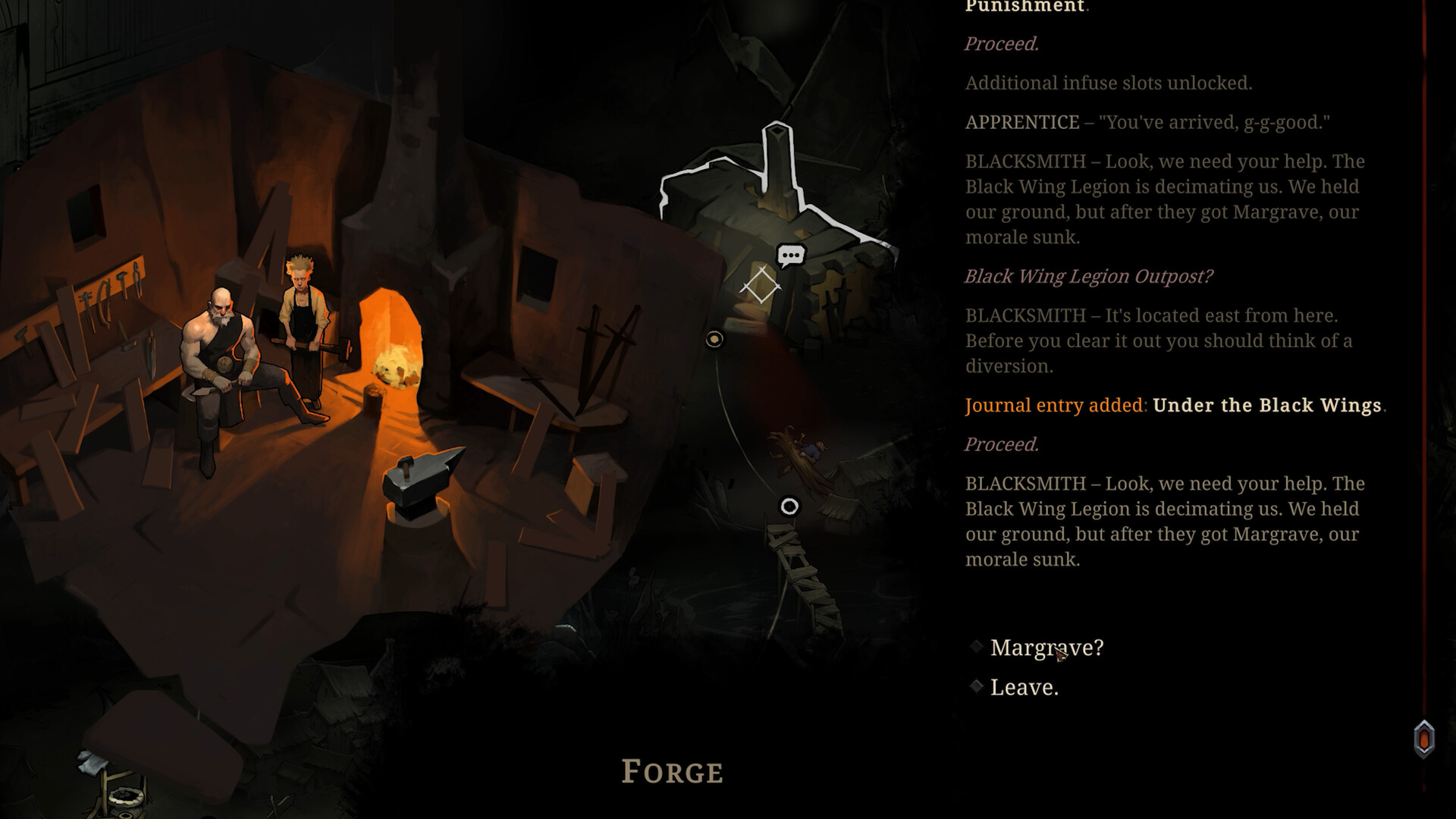
Carry progression into story interactions
Developer updates state that attribute cards can unlock interactions during story events. Progression is therefore not confined to battle efficiency. A card or skill choice can affect which approach becomes available when the party encounters a narrative problem, giving respec and deck planning an exploration consequence. This fact does not identify every check, required value, or outcome, so the guide treats the connection as a planning principle rather than a complete solution list.
Before committing to a route, ask what the Journal currently records, which attribute contributions the party has developed, and whether recent equipment or skill changes opened a different line. If an option appears, attach it to the exact event and current build state. If it does not appear, avoid guessing the missing requirement from color, icon placement, or one similar interaction. The absence of an option can guide later review, but it does not by itself prove which card, branch, or item would unlock it.
Use respec experiments carefully when testing story access. Change one personal progression choice, keep the rest of the party stable, and revisit only when the campaign still permits the relevant interaction. Record the before-and-after state without claiming that the result applies to every route. This creates a useful bridge between combat planning and exploration: attribute development may expand available approaches, while the Journal preserves the narrative context needed to understand why a newly available interaction matters.
Frequently asked questions
How many regions are in Shards of Order?
The official Steam description states that the campaign includes three unique regions. This guide keeps that confirmed structure but does not publish unofficial region names or infer a complete route list from map screenshots. A visible node, path, or landscape can show that exploration is connected, yet it cannot establish a location's name, mandatory order, encounter contents, or reward. Region pages should be added only when their names and boundaries can be reproduced from the game or an official publication; until then, Journal context is the safer way to track movement and unresolved threads.
Does the game use quest markers?
Developer updates describe a Journal that records events and suggests possible solutions instead of relying on conventional quest markers. Players should connect each entry with the conversation or choice that produced it, distinguish completed information from an open possibility, and review it after meaningful progression changes. Attribute cards can unlock interactions during story events, so a later build state may make an earlier thread relevant again. The Journal is a decision record, not proof that every suggested possibility has one mandatory route or that an unlabeled map point is the required destination.